
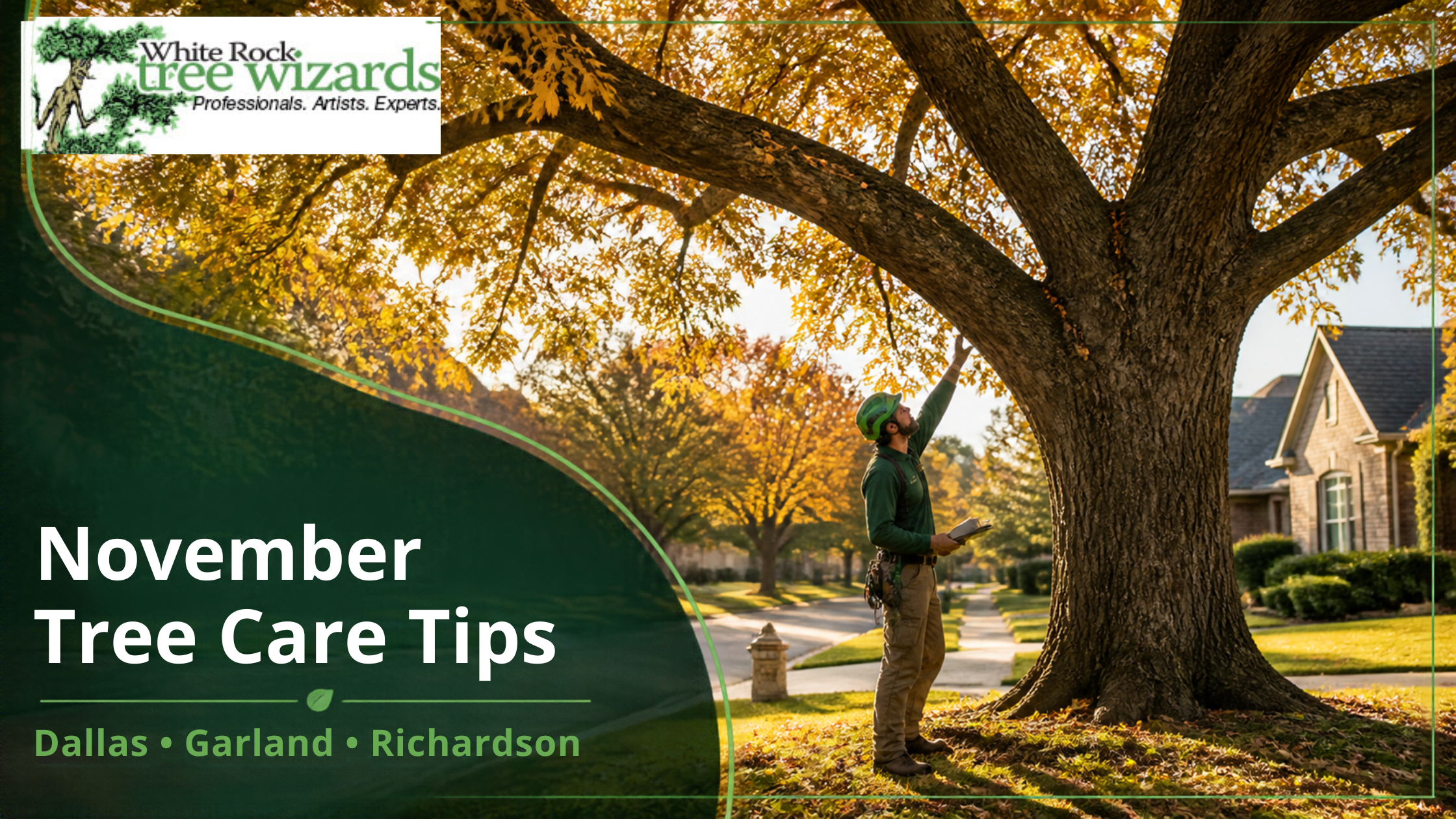

November 2026 Dallas Tree Doctor: Tree Care Tips for Dallas, Garland, and Richardson
November is an excellent time to give your trees some attention before winter arrives in North Texas. Cooler temperatures provide an opportunity to inspect tree health, plan seasonal pruning, plant new trees, and address damaged or potentially hazardous branches before winter storms and freezing weather become a concern. At Arbor Wizard, we understand how important healthy trees are to the beauty, shade, and value of your property. Whether you own a home or manage a commercial property in Dallas, Garland, Richardson, Rowlett, Mesquite, or the surrounding communities, a little preventative tree care can make a difference.If you have noticed dead branches, thinning foliage, leaning trees, or signs of disease, November is a good time to arrange a professional tree assessment.
1. Schedule a Tree Health Inspection Before Winter
Fall is a good time to inspect your trees for problems that may become more serious during winter weather. Strong winds, ice, and occasional freezing temperatures can put additional stress on trees with damaged limbs or weakened structures. Walk around your property and look for:- Dead, broken, or hanging branches.
- Cracks or splits in major limbs.
- Mushrooms or unusual growth near the trunk or roots.
- Areas of peeling bark, decay, or visible trunk damage.
- Trees leaning more than usual or showing signs of root disturbance.
2. Plan Your Tree Trimming and Pruning
November can be a suitable time to plan or perform many types of tree pruning in North Texas. Removing deadwood and correcting certain structural problems can help reduce hazards and prepare trees for winter.However, proper timing matters. Oak trees require special consideration because of oak wilt, a serious disease that can spread through interconnected roots and insects attracted to fresh wounds.
Texas oak wilt guidance recommends avoiding unnecessary pruning or wounding of oak trees from February through June. Fresh oak wounds should be painted immediately, regardless of the time of year. Emergency work to address a dangerous branch should not be delayed because of the season.
Avoid excessive trimming or tree topping, which can damage a tree’s natural structure and long-term health. An experienced tree professional can determine which branches should be removed and when the work should be performed.3. Protect Tree Roots With Proper Mulching
North Texas weather can change quickly, and trees still need protection from fluctuating soil temperatures and dry conditions.A layer of organic mulch can help retain soil moisture, moderate soil temperatures, and reduce competition from grass and weeds. Spread mulch over the root area without piling it against the trunk.
Keep several inches of space between the mulch and the trunk to help prevent excessive moisture buildup and bark problems. Avoid creating a mound of mulch around the base of the tree.
Healthy roots provide the foundation for healthy trees, so proper mulching is a simple step homeowners can take to support long-term tree health.4. Remember to Water During Dry Fall Weather
Cooler weather does not mean trees no longer need water. North Texas can experience dry periods during the fall and winter, and newly planted trees are particularly vulnerable because their root systems are not fully established.Check the soil before watering. If conditions are dry, water slowly and deeply around the root zone rather than concentrating water directly against the trunk.
Pay special attention to trees planted within the past year or two. Continue monitoring soil moisture through the fall, adjusting watering according to rainfall, soil conditions, and local watering restrictions.5. Consider Planting New Trees in November
Fall is often a favorable season for planting many trees in North Texas. Cooler air temperatures and soil that retains warmth can give roots time to establish before the next summer’s heat.Before choosing a new tree, consider its mature height, canopy width, sunlight requirements, and water needs. Make sure there is adequate room between the tree and your home, driveway, sidewalks, fences, and overhead utility lines.
Choosing the right tree for the right location can help prevent future problems with roots, branches, and structures.
Water newly planted trees thoroughly and maintain appropriate soil moisture as they establish. A local tree professional can help you determine which species and planting locations are best suited to your property.6. Watch for Signs of Oak Wilt and Other Tree Problems
Oak wilt remains an important concern for Texas property owners. Depending on the species, symptoms may include leaf discoloration, wilting, thinning foliage, or sections of the canopy that decline unexpectedly.Other tree problems can result from drought stress, root damage, pests, and fungal diseases. Because different problems can produce similar symptoms, avoid assuming that a tree has a particular disease based on appearance alone.
If an oak or another valuable tree begins declining unexpectedly, arrange a professional evaluation. Early identification can help determine whether treatment, monitoring, pruning, or another course of action is appropriate.
For additional information about oak wilt prevention and management, visit Arbor Wizard’s guide to oak wilt.7. Prepare for Winter Storms and Falling Branches
Before winter weather arrives, inspect trees near homes, garages, driveways, sidewalks, and parking areas. Dead limbs and structurally weak branches can become hazards during high winds or ice accumulation.Pay particular attention to branches extending over roofs, vehicles, outdoor living areas, and frequently used walkways.
Do not wait for a storm to discover that a tree needs attention. Preventative maintenance can help identify problems before they become urgent, although no tree can be guaranteed to withstand every severe weather event.
If a tree or branch is touching a power line, stay away and contact the appropriate utility provider.Need a Dallas Tree Doctor This November?
Healthy trees add beauty, shade, and value to your property, but they need appropriate care throughout the year. November is a practical time to assess tree health, plan seasonal pruning, protect roots, and address potential safety concerns before winter.Arbor Wizard provides tree care and tree repair services for residential and commercial properties in the Dallas area, including Dallas, Garland, Richardson, Rowlett, Mesquite, Sunnyvale, and surrounding North Texas communities.
Whether you need help evaluating a declining tree, addressing hazardous limbs, or planning ongoing tree maintenance, professional guidance can help you make informed decisions about your landscape.
Contact Arbor Wizard to discuss your tree care needs and schedule an assessment. Taking care of potential problems now can help you prepare your property for the changing seasons.About Arbor Wizard
Arbor Wizard helps property owners throughout the Dallas area care for their trees with professional tree services and maintenance. From identifying potential tree problems to addressing damaged branches, the goal is to help homeowners and businesses maintain safer, healthier, and more attractive landscapes. Prepare your trees for winter with November tree care tips for Dallas, Garland, and Richardson. Learn about pruning, oak wilt, watering, and tree health.